
Articulation books - Starting and ending /g/ and /l/ sounds

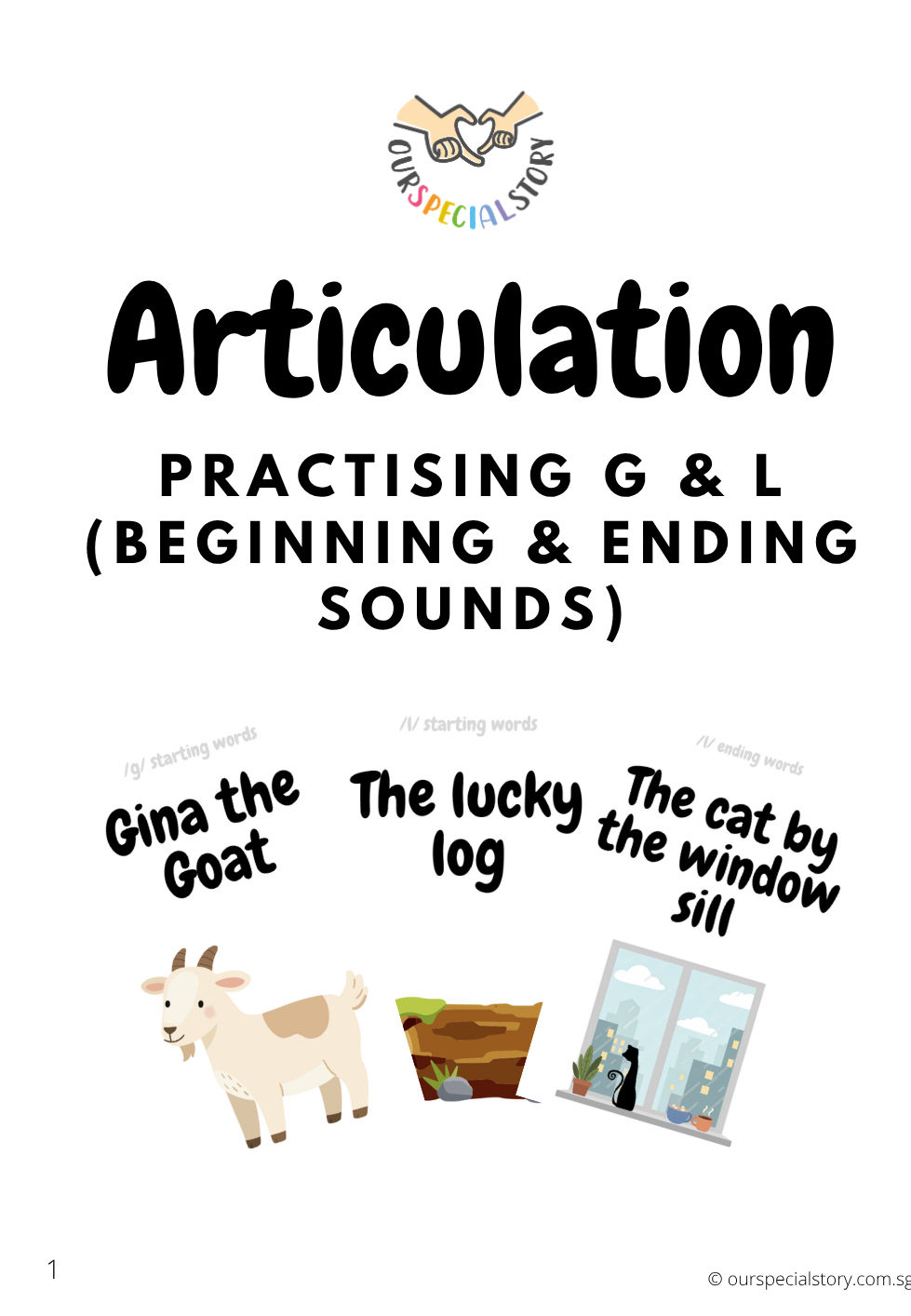
What is it
These are short, easy-to-read stories designed to help children practise specific speech sounds. Each story focuses on a target sound (such as /l/ at the beginning or end of words) and includes repetition and visuals to support learning. The simple and engaging format makes it easier for children to stay focused while building their speech skills.
Teaching Objectives
Improve articulation of target speech sounds (e.g., /g/, /l/)
Practise articulation at word, phrase, and simple sentence level
Support early reading skills through short, easy stories
Improve speech clarity and intelligibility
Build confidence when speaking and reading aloud
How to use
1) Introduction:
Introduce the target sound (e.g., “Today we are practising the /g/ sound”)
Model how to produce the sound (mouth shape, tongue placement)
Let the child try the sound in isolation before starting
2) Warm- up:
Practise a few target words from the book (e.g., goat, green, garden)
Use repetition (3–5 times per word)
Provide cues if needed (visual, verbal, or gestural)
3) Read the story:
Read the story together slowly
Emphasise the target sound slightly when reading
Encourage the child to repeat words, phrases, or short sentences
4) Extension Activity (Optional):
Ask simple questions about the story (e.g., “Where did Gina go?”)
Let the child retell parts of the story
Identify and list target sound words from the book
Practise using target words in their own sentences
Teaching tips
Keep sessions short and engaging (5–15 minutes)
Focus on quality of sound production, not quantity
Use lots of modelling before expecting independent production
Repeat the same book across multiple sessions for mastery
Match the difficulty level to the child’s ability (word → phrase → sentence)
Use positive reinforcement (e.g., praise, stickers, small rewards)
Incorporate movement or play if the child loses attention
Here are some videos that can help with teaching the concept:
The /g/ sound
The /l/ sound
-Specially created by Our Special Story-
Our Special Story provides Home Based 1-on-1 ABA Therapy, Early Intervention Class, School Readiness Class, Social Skills Class and School Shadowing for children with autism spectrum disorder, speech delay and other special needs.
ABA Therapy can help to improve behaviours, attention, speech and communication,cognitive skills, motor skills, school readiness, social skills, self help skills and more!
#freeprintables #schoolreadiness #earlyintervention #ourspecialstory #abatherapy #socialskills #autism #specialneeds #autismsingapore #specialneedssingapore #preschoolactivities #ourspecialprintables #differentiatedlearning


Comments